
Songs From the Labyrinth
Studio Album by Sting & Edin Karamazov released in 2006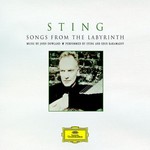
- Browse similar in:
- Renaissance albums
Songs From the Labyrinth review
16th Century Music in Modern Sound
The new creation of Sting, Songs From The Labyrinth, is really outstanding. It is an album recorded only with the lute – a sixteenth century music instrument with lots of strings – and Sting’s amazing voice. Everything started back in the 80’s when the singer got acquainted with the music of John Dowland, the lutenist at the times of Queen Elizabeth I. The musician was fascinated by this charming music of the 16th century, which was ‘gently haunting’ him since. When about two years ago his long-term guitarist Dominic Miller presented him with a lute that he made for the singer, Sting decided to fulfill his desire to learn to play this fascinating instrument. The tracks of the album represent the songs of the 16th century as they were supposed to sound at those times. However, Sting admits that his vocals are not those of the especially trained early music stylists, but, nevertheless, he tried to put some fresh sound in these wonderful compositions. In between the songs we can hear Sting reading John Dowland’s letters to the Queen, an inventive addition to make the imagery more vivid.
Heartbreaking Sadness and Cheerful Beauty
The celebrated British singer and songwriter confesses that this piece of work was not supposed to be released as an album. Together with Serbian lutenist Edin Karamazov, who accompanied him on lute, they decided to make it an album only when they added the extracts of the letters. John Dowland’s lyrics were often referred to as sad and moving, while his music was often really elated. Such songs as In Darkness Let Me Dwell and Flow My Tears amaze by their heartbreaking sadness, while Come Again and The Lowest Trees Have Tops are wonderfully cheerful and beautifully melodic. The album opens with a short piece As I Went to Willingham, which was an anonymous popular ballad of the era. Two of the most beautiful and powerful songs of the album are, perhaps, two fantasias (or fancies) including the exquisite Fantasy and the complex Forlorn Hope Fancy, that disclose Dowland’s songwriting talent. Fine Knacks For Ladies and Can She Excuse My Wrongs? are the two really amazing four-part harmonies, in which Sting performs all the parts, providing additional richness and warmth of the sound.
Devotion to Everything Interesting and Unusual
It is worth to note that Dowland’s music was considered by his contemporary to be something of the kind of our pop music. It could be heard on the streets, as a casual entertainment in private homes, at court. And that is how Sting himself assesses these wonderful compositions: as the pop-music of the 16th century. The musician’s admirers will be delighted to hear how rich, pure and prominent his voice sounds on the album. Recovering the atmosphere of the Elizabethan period, Sting creates the new and diverse sound, once again demonstrating the new side of his talent. While it would be natural for some other musician to commence a tour or to release some life album, Sting ventures to the original field of music, creating a superb product. The album is released by Deutsche Grammaphon, the world’s most well-known label of classical music. This fact contributes to the exception of the record, proving Sting’s devotion to everything interesting and unusual. The record, as unique as it is magnificent, is sure to highlight the collection of any music admirer.